

lift and skip hoist -TURKISH EXPORTERS
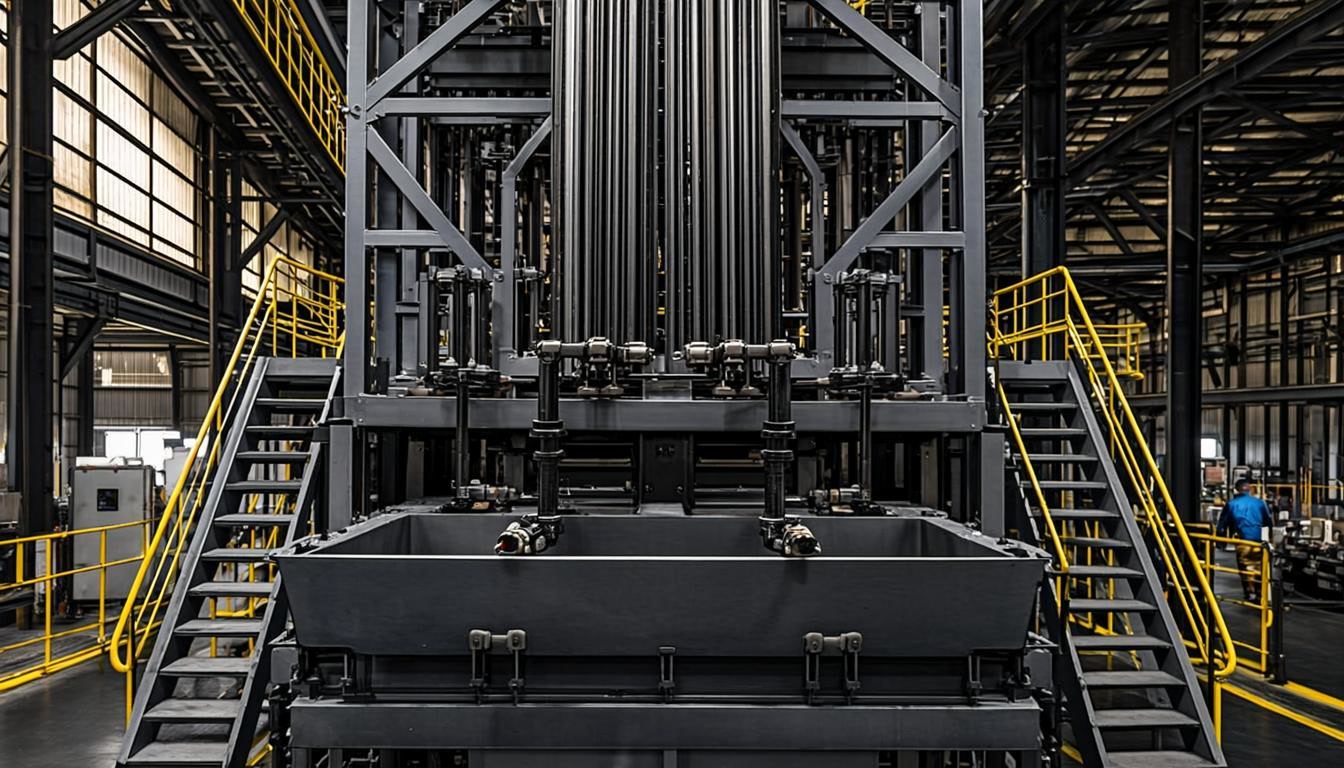
Turkey HS Code 842810 Lift and Skip Hoist Exporters
Turkey has established itself as one of the world's leading exporters of lifting and hoisting equipment classified under HS Code 842810, which covers lifts, skip hoists, and similar lifting machinery. With a strong industrial base, advanced manufacturing capabilities, and strategic geographic positioning at the crossroads of Europe, Asia, and the Middle East, Turkish manufacturers have become key suppliers of lift and skip hoist equipment to construction sites, industrial facilities, and infrastructure projects worldwide. The Turkish lift and hoist industry benefits from decades of engineering expertise, competitive pricing, compliance with international safety standards, and a growing reputation for innovation in automation and smart technology integration. This page presents a comprehensive overview of Turkey's top exporters and manufacturers in the lift and skip hoist sector, along with detailed company profiles, industry insights, and essential information for international buyers and importers.
Company Profiles — Top Turkish Lift and Skip Hoist Exporters
1. LÖHER ASANSÖR VE YÜRÜYEN MERDİVEN SAN. TİC. A.Ş. (Meteor Löher)
Established in 1967 in Izmir, Turkey, Löher is a pioneering brand in Turkey's elevator and escalator sector with over 55 years of continuous growth. In 2022, Löher joined the Meteor Group of Companies and now operates as Meteor Löher. The company is recognized as a pioneer in export within its sector, having served markets across the Middle East and beyond. Meteor Group has diversified interests spanning retail, construction, energy, IT, tourism, agriculture, and industry. Löher's extensive product portfolio and long-standing reputation make it a significant player in the Turkish lifting equipment export market, particularly for Turkey elevator guide rail manufacturers and vertical transportation solutions.
- Escalators and moving walkways
- Elevators custom-built for shopping malls, airports, and underground systems
- Disabled/accessibility platforms including vertical lifting platforms, wheelchair transport platforms, and stair platforms
- Modernization services for existing elevator and escalator installations
Key Strengths: 55+ years of industry experience; multi-language support (TR, DE, RU, AR, EN); international distributorship agreements across multiple continents.
2. GÜRALP VİNÇ VE MAKİNA KONSTRÜKSİYON SAN. TİC. LTD. ŞTİ.
Founded in 1991 in Izmir, Güralp Vinç has over 35 years of experience in crane and lifting equipment manufacturing. The company operates from a total area of 53,000 m² (25,000 m² covered) with a production capacity of 1,800 machines per year. Güralp has delivered products to over 80 countries and maintains an extensive domestic and international marketing network, providing comprehensive services including periodic maintenance, technical service, heavy repair, modernization, and training. As one of Turkey's leading Turkish crane manufacturers and companies, Güralp plays a vital role in the global lifting equipment supply chain.
- Overhead cranes, jib cranes, gantry cranes, and EOT cranes
- Wire rope hoists and manipulators
- Transfer carts and remote control systems for cranes
- Energy transmission systems including conveyor systems and drive groups
Key Strengths: 53,000 m² manufacturing facility; 1,800 machines/year production capacity; exports to 80+ countries; in-house Quality Laboratory for rigorous product testing and certification.
3. GÜRİŞ İNŞ VE MÜH. A.Ş. (Gürüş Construction and Engineering)
Gürüş is a large, diversified Turkish conglomerate with primary focus on construction, engineering, and energy. The company operates through Gürüş Holding and numerous subsidiaries covering energy production (wind, hydroelectric, geothermal, thermal), construction, cement production, machinery manufacturing, mining, and hospitality. The group produces 100% green energy across its renewable portfolio with 800+ MW total capacity and has international operations including subsidiaries in Ukraine, Syria, and Kosovo. Through its subsidiary Gürüş Makina, the group provides heavy lifting and hoisting equipment that supports large-scale construction and Turkey construction and mining machinery industry projects worldwide.
- Energy projects: wind farms, hydroelectric plants, geothermal plants
- Industrial plants: cement factories, steel plants, petrochemical plants
- Infrastructure: dams, water treatment plants, ports, roads, rail systems, and pipelines
- Heavy lifting and hoisting equipment via subsidiary Gürüş Makina
Key Strengths: 800+ MW renewable energy portfolio; ENR Top 250 International Contractor recognition; integrated Management System certifications ensuring quality across all operations.
4. TML İNŞAAT A.Ş.
TML İnşaat A.Ş. is a Turkish construction and engineering company with proven international experience, particularly in the Middle East, North Africa, and the Caucasus. The company specializes in infrastructure, marine, and industrial construction projects including offshore works, subsea pipe installation, container storage yards, desalination plants, and asphalt works. TML is ISO certified (ISO 9001, ISO 14001, ISO 45001:2018) and has received multiple Final Acceptance and Provisional Acceptance certificates on international projects. TML's involvement in heavy industrial construction frequently requires specialized hoist and lifting equipment for material handling on large-scale job sites.
- Marine and offshore construction: subsea HDPE/GRP pipe installation, tetrapod works, port infrastructure
- Industrial construction: desalination plants, steel mill erection, cement plant projects
- Container storage yard construction
- Asphalt and road works and turnkey infrastructure projects
Key Strengths: ISO 9001, I
5. BULUT MAKİNA ASANSÖR SAN. VE TİC. LTD. ŞTİ.
Bulut Makina has been operating since 1988, nearly 40 years, as one of Turkey's pioneering elevator industry companies. The company runs a 10,000 m² factory equipped with state-of-the-art technology in Çayırova/Kocaeli, serving both domestic and international markets. Bulut Makina introduced many innovations to the Turkish elevator sector, including launching its own automatic elevator door brand “MB” in 2009. The company is also a distributor for Fermator automatic doors, GMV hydraulic units, and Sicor elevator machines. Located in the industrial region near Izmit, Bulut Makina is strategically positioned for efficient export operations.
- Elevator cabins: passenger, freight, hospital, and panoramic types
- Automatic doors (MB brand doors) and hydraulic units and components
- Elevator car frames/structures, guide rails, and elevator machines and motors
- Complete package elevators for turnkey installations
Key Strengths: 40 years of industry experience; 10,000 m² modern factory; own brand automatic doors (MB); ISO Integrated Management System certified; authorized distributor of Fermator, GMV, Sicor.
6. DAL TEKNİK MAKİNA TİC. VE SAN. A.Ş. (DAL Group)
DAL is a leading Turkish engineering and manufacturing company with 40+ years of excellence, delivering world-class engineering solutions from design through turnkey execution. The company has a strong R&D center and highly capable engineering teams, operating across multiple sectors including cement, mining, and industrial automation. DAL has completed major international projects in the Philippines, Libya, Colombia, and across Europe, Africa, and the Middle East. DAL's expertise in industrial lifting and material handling equipment positions it as a key exporter within the Turkey construction machinery manufacturers ecosystem, particularly for heavy-duty skip hoists and bucket elevators used in mining and cement applications.
- Industrial lifting and material handling equipment: bucket elevators, conveyors, screw conveyors, chain elevators
- Cement plant equipment: preheater cyclones, clinker coolers, kiln outlet seals, airslides, diverter gates
- Turnkey engineering and design for industrial facilities
- Heavy industrial lifting solutions and digitalization/automation systems
Key Strengths: 40+ years of engineering excellence; strong R&D center; global presence with projects in 15+ countries; turnkey project delivery capability.
7. SİLVER TEKNİK İNŞAAT MADENCİLİK ELEKTRONİK MAKİNE VE PETROL TİCAR. A.Ş.
Silver Teknik was established in 1981 in Trabzon, Turkey, and later relocated to OSTİM/Ankara. The company specializes in industrial facility installation, mechanical assembly, piping, and construction works. Since 2005, Silver Teknik has expanded internationally, opening a branch in Erbil, Iraq. In 2010, the company established a 3,600 m² factory in Başkent Organized Industrial Zone (OSB) to bring manufacturing in-house, with extensive experience in fuel storage terminal installation and pipeline construction. Silver Teknik's expertise in mechanical assembly and heavy equipment installation makes it a relevant participant in Turkey's lifting equipment and industrial machinery export sector.
- Industrial facility installation and mechanical assembly and erection
- Pre-fabrication and workshop manufacturing
- Machine and equipment assembly, mechanical piping, electrical and automation works
- Construction works, pipeline construction, and fuel storage terminal installation
Key Strengths: 40+ years of experience; 3,600 m² factory in Başkent OSB; international operations since 2005 (branch in Erbil, Iraq); in-house pre-fabrication capability for custom solutions.
8. ÜÇGEN MÜHENDİSLİK TAAH. İNŞ. ASANSÖR KLİMA SAN LTD. ŞTİ. (Üçgen Engineering Group)
Üçgen Mühendislik is a Turkish engineering group operating through three brands: Dündar Asansör (elevator installation company), Kernek Asansör (elevator manufacturing company), and Üçgen Mühendislik (engineering and contracting). The group has a factory located in the 1st Organized Industrial Zone (OSB), Yeşilyurt, Malatya, Turkey, and sells elevator materials and contracts mechanical installation systems for elevators, offering a comprehensive range of elevator components and drive systems. The group's three-brand structure allows it to serve the full spectrum of elevator needs, from machinery and equipment supply to installation and after-sales service, making it a versatile partner for international buyers. Other notable players in this space include the ASIR Elevator Company and similar Turkish elevator manufacturers.
- Drive systems: geared machines, gearless machines, lift motors
- Hydraulic systems: hydraulic units and pistons, tanks, valves, pipes
- Safety devices: overspeed governors, safety gears, buffers
- Control systems and signalization: lift controllers, inverters, encoders
- Elevator cars: passenger, freight, hospital, panoramic
- Doors: landing door mechanisms, car door mechanisms
- Guide rails and accessories, suspension systems (steel ropes, compensation chains)
Key Strengths: Three-brand group structure (engineering + manufacturing + installation); factory in 1st OSB Malatya; comprehensive full-spectrum elevator component manufacturing and supply.
Lift and Skip Hoist: Essential Equipment for Modern Construction and Industrial Operations
What Are Lift and Skip Hoists (HS Code 842810)?
HS Code 842810 falls under the broader Harmonized System classification 8428, which encompasses “lifting and handling machinery” not otherwise specified. Specifically, HS Code 842810 covers lifts, skip hoists, and similar lifting machinery designed for raising or lowering goods, materials, or personnel. Skip hoists are specialized lifting devices commonly used in construction, mining, and industrial applications to vertically transport bulk materials such as concrete, aggregate, gravel, sand, and other construction materials. These machines are essential for efficient material handling on multi-story construction sites, in mining shafts, cement plants, silos, and heavy industrial facilities. Understanding this classification is critical for importers seeking UK importers for HS Code 842810 and other international trade partners looking to source reliable Turkish lifting equipment.
Types of Lifting Equipment in This Category
The HS Code 842810 category encompasses a diverse range of lifting equipment. Skip hoists are among the most common, designed to carry heavy loads of bulk materials in a skip (bucket) that is raised and lowered along a vertical or inclined track. These are widely used on construction sites for moving concrete, bricks, and other building materials between floors. Personnel lifts (man lifts) are designed specifically for transporting workers vertically on construction sites, particularly
in high-rise building projects. Material lifts (goods lifts) are engineered for moving goods and materials in warehouses, factories, and industrial facilities. Construction hoists, which include both rack-and-pinion hoists and wire rope hoists, are temporary vertical transportation systems installed on building exteriors during construction. Bucket elevators, used extensively in mining, agriculture, and cement industries, are continuous conveying systems that transport bulk materials vertically using buckets attached to a belt or chain. Each type of equipment has specific design requirements, load capacities, and safety features tailored to its intended application.Turkey's Position as a Global Exporter
Turkey occupies a prominent position in the global lift and skip hoist export market, leveraging its robust manufacturing infrastructure, skilled engineering workforce, and strategic geographic location. The country's lifting equipment industry has grown significantly over the past three decades, supported by strong domestic demand from Turkey's own booming construction sector and increasing international orders. Turkish manufacturers export lift and hoist equipment to over 80 countries across Europe, the Middle East, Africa, Central Asia, and the Americas. Key export destinations include Iraq, Saudi Arabia, the United Arab Emirates, Germany, the United Kingdom, Russia, and various African nations. Turkey's competitive advantage stems from several factors: competitive pricing compared to European manufacturers, compliance with international quality and safety standards, flexible production capabilities for both standard and custom solutions, strong after-sales service networks, and the ability to deliver projects on tight timelines. Turkish companies like Güralp Vinç, DAL Group, and Bulut Makina have established themselves as internationally recognized brands in the lifting equipment sector, continuously investing in R&D, expanding production facilities, and obtaining international certifications to meet the growing demands of global markets.
Key Applications in Construction and Industry
Lift and skip hoist equipment classified under HS Code 842810 serves critical functions across numerous sectors. In the construction industry, skip hoists are indispensable for high-rise building projects, enabling efficient vertical transportation of concrete, steel reinforcement, bricks, blocks, and other heavy building materials. Construction personnel hoists safely transport workers to elevated work areas, significantly improving productivity and safety on large-scale job sites. In the mining sector, skip hoists are used in mine shafts to transport extracted ore, coal, and other minerals from underground to the surface, playing a vital role in mining operations worldwide. The cement and concrete industry relies heavily on bucket elevators and continuous skip hoists for transporting raw materials (limestone, clay, gypsum) and finished products between processing stages. Industrial facilities, including manufacturing plants, warehouses, and logistics centers, use goods lifts and material handling hoists for efficient movement of heavy equipment, components, and finished products. In the energy sector, lifting equipment is essential for the construction and maintenance of power plants, wind turbines, and oil and gas infrastructure. Ports and harbors utilize specialized hoisting equipment for loading and unloading cargo, while the agricultural industry employs bucket elevators for grain handling and storage operations.
Safety Standards and Certifications (CE, ISO, EN Standards)
Turkish lift and hoist manufacturers adhere to rigorous international safety standards and certifications, ensuring their products meet the highest levels of quality and reliability. CE marking is mandatory for all lifting equipment exported to the European Union, demonstrating compliance with the EU Machinery Directive (2006/42/EC) and other applicable directives. This involves comprehensive risk assessments, technical documentation, and conformity assessments conducted by authorized Notified Bodies. ISO 9001 certification for quality management systems is widely held by Turkish manufacturers, ensuring consistent product quality and continuous improvement in manufacturing processes. ISO 14001 environmental management certification and ISO 45001 occupational health and safety certification are also increasingly adopted by leading Turkish companies. EN standards specific to lifting equipment are crucial, including EN 81 for elevator safety, EN 12158 for construction hoists, EN 1808 for rope access equipment, and various EN standards governing crane design, manufacturing, and operation. Turkish manufacturers work with internationally recognized certification bodies such as TÜV, Bureau Veritas, Lloyd's Register, and SGS to obtain these certifications. Additionally, many Turkish companies maintain in-house quality control laboratories and testing facilities to verify the performance, durability, and safety of their products before shipment. This commitment to international standards has been instrumental in building trust with global buyers and expanding Turkey's market share in the lift and hoist export sector.
Export Markets and Growth Trends
Turkey's lift and skip hoist export market has experienced consistent growth over the past decade, driven by increasing global construction activity, urbanization trends in developing countries, and Turkey's expanding trade relationships. The Middle East remains one of the largest export markets for Turkish lifting equipment, with countries like Iraq, Saudi Arabia, the UAE, Qatar, and Kuwait investing heavily in infrastructure development and megaprojects. European countries, particularly Germany, the United Kingdom, France, and the Netherlands, represent significant markets where Turkish manufacturers compete on quality and price. The Russian and CIS (Commonwealth of Independent States) market has historically been important for Turkish crane and hoist exports. African nations, including Nigeria, Kenya, Ethiopia, and Algeria, are emerging as high-growth markets due to rapid urbanization and infrastructure investment. Central Asian countries such as Kazakhstan, Uzbekistan, and Turkmenistan also present growing opportunities for Turkish lifting equipment suppliers. Industry analysts project continued growth in Turkish lift and hoist exports, supported by Turkey's participation in major international trade fairs, the development of bilateral trade agreements, and the ongoing modernization of Turkish manufacturing facilities with advanced technologies such as robotics, IoT-enabled monitoring systems, and energy-efficient drive systems.
Technology Innovations: Automation, IoT, and Green Technology
The Turkish lift and hoist industry is at the forefront of technological innovation, with manufacturers increasingly integrating advanced technologies into their product offerings. Automation is transforming the sector, with computer-controlled hoisting systems, programmable logic controllers (PLCs), and automated load monitoring becoming standard features in modern equipment. Internet of Things (IoT) technology enables real-time monitoring of hoist performance, predictive maintenance capabilities, and remote diagnostics, significantly reducing downtime and improving operational efficiency. Turkish manufacturers are developing smart hoisting systems that can communicate with building management systems, track usage patterns, and generate detailed performance reports. Variable frequency drives (VFDs) are now widely used to optimize energy consumption and provide smoother, more precise control of lifting operations. Green technology initiatives include the development of energy-efficient hoist motors, regenerative braking systems that recover energy during descent, a
nd the use of environmentally friendly materials and manufacturing processes. Safety technology has also advanced significantly, with anti-sway systems, overload protection, collision avoidance systems, and real-time load moment indicators becoming standard on many Turkish-manufactured hoists. Some leading Turkish companies are also exploring the integration of artificial intelligence for advanced fault detection, machine learning for optimized maintenance scheduling, and digital twin technology for virtual testing and simulation of hoisting systems before deployment.Future Outlook for the Turkish Lift and Hoist Industry
The future outlook for Turkey's lift and skip hoist industry is highly positive, supported by multiple converging factors. Global construction activity is expected to remain robust, driven by urbanization, population growth, and government infrastructure investment programs worldwide. Turkey's young and skilled engineering workforce, combined with its competitive manufacturing costs and strategic geographic location, positions the country favorably for continued export growth. The growing emphasis on smart cities and sustainable construction is creating new demand for advanced, energy-efficient lifting equipment, an area where Turkish manufacturers are actively investing. Industry 4.0 technologies, including advanced robotics, AI-powered quality control, and digital manufacturing processes, are being adopted by leading Turkish companies to enhance productivity and product quality. The expansion of Turkey's free trade zone network and participation in regional trade agreements will further facilitate export growth. Additionally, the increasing focus on workplace safety regulations globally is driving demand for high-quality, certified lifting equipment, an area where Turkish manufacturers have built a strong reputation. Challenges remain, including competition from low-cost manufacturers in Asia, fluctuating raw material prices, and the need for continued investment in R&D to stay at the technological forefront. However, with over 55 years of accumulated expertise, a diversified product portfolio, and an established global presence, Turkey's lift and skip hoist industry is well-positioned to capitalize on emerging opportunities and maintain its competitive edge in international markets for years to come.
Frequently Asked Questions (FAQ)
What is HS Code 842810 and what products does it cover?
HS Code 842810 is a Harmonized System classification that specifically covers lifts, skip hoists, and similar lifting machinery not otherwise classified. This includes construction hoists, material lifts, personnel hoists, skip hoists for construction and mining, bucket elevators, and various types of vertical lifting equipment used for transporting goods, materials, or people. The code falls under the broader heading 8428 which encompasses other lifting and handling machinery such as cranes, elevators, and continuous-action elevators and conveyors.
Why is Turkey a major exporter of lift and skip hoist equipment?
Turkey has become a major exporter of lift and skip hoist equipment due to several key advantages: a strong domestic manufacturing base with decades of accumulated engineering expertise, competitive production costs compared to Western European manufacturers, compliance with international quality and safety standards (CE, ISO, EN), strategic geographic location between Europe, Asia, and the Middle East, a booming domestic construction sector that drives innovation and product development, extensive export experience with established trade networks in over 80 countries, and a skilled workforce with proficiency in multiple languages facilitating international business relationships.
What are the main types of skip hoists used in construction?
The main types of skip hoists used in construction include rack-and-pinion hoists (using a geared rack for vertical movement along a mast), wire rope hoists (using steel wire ropes wound on a drum for lifting), inclined skip hoists (transporting materials along an angled path), and vertical skip hoists (moving materials straight up and down). Each type is designed for specific applications, load capacities, and site conditions. Construction hoists may be designed for material-only transport, personnel transport, or dual-purpose use depending on the project requirements and applicable safety regulations.
What safety standards apply to Turkish lift and hoist exports?
Turkish lift and hoist exports must comply with multiple international safety standards depending on the target market. Key standards include the EU Machinery Directive (2006/42/EC) requiring CE marking, EN 81 series for elevator and lift safety, EN 12158 for construction hoists, ISO 9001 for quality management systems, ISO 14001 for environmental management, ISO 45001 for occupational health and safety, and various national standards of importing countries. Leading Turkish manufacturers also obtain certifications from internationally recognized bodies such as TÜV, Bureau Veritas, and Lloyd's Register to demonstrate compliance with global safety requirements.
Which countries import the most lift and skip hoists from Turkey?
The top importers of Turkish lift and skip hoist equipment include countries in the Middle East (Iraq, Saudi Arabia, UAE, Qatar, Kuwait), Europe (Germany, United Kingdom, France, Netherlands, Russia), Africa (Nigeria, Kenya, Ethiopia, Algeria), and Central Asia (Kazakhstan, Uzbekistan, Turkmenistan). The Middle East is the largest regional market due to massive infrastructure development and construction projects, while European markets value Turkish products for their balance of quality and competitive pricing. African markets represent the fastest-growing segment for Turkish lifting equipment exports.
What is the difference between a lift and a skip hoist?
A lift (or elevator) is a lifting device primarily designed to transport people or goods between different floor levels in a building or structure, typically using a car or platform that moves within a shaft. A skip hoist is specifically designed to transport bulk materials (such as concrete, gravel, sand, or ore) in a skip (bucket or container) along a vertical or inclined track. Skip hoists are generally used in construction, mining, and industrial applications where the primary requirement is moving heavy bulk materials rather than personnel. While both devices perform vertical lifting, their design, safety requirements, and applications differ significantly.
How has technology improved modern lift and hoist systems?
Modern lift and hoist systems have benefited from significant technological advancements including IoT-enabled monitoring for real-time performance tracking and predictive maintenance, variable frequency drives (VFDs) for energy-efficient and precise speed control, computerized control systems with PLC-based automation, anti-sway and collision avoidance safety systems, regenerative braking for energy recovery, remote monitoring and diagnostics capabilities, AI-powered fault detection and predictive analytics, digital twin technology for virtual testing and simulation, and smart load moment indicators. These innovations have improved safety, efficiency, productivity, and reduced operational costs for end users worldwide.
What should importers consider when sourcing lift equipment from Turkey?
Importers sourcing lift and skip hoist equipment from Turkey should consider several critical factors: verify the manufacturer's compliance with relevant international standards (CE, ISO, EN) and request copies of all certifications, evaluate the company's export experience and track record in their specific market region, assess the manufacturer's production ca
Yorumlar - Yorum Yaz