


Kazakhstan Trade Policy and Economic Diversification Strategy 2025
Introduction: Kazakhstan's Trade Evolution in the Modern Era
Kazakhstan's trade policy landscape has undergone remarkable transformation since the country's independence in 1991, evolving from a centrally planned import system to a market-oriented trade framework integrated with global supply chains. As Central Asia's largest economy, with a GDP estimated at $280-300 billion and a population exceeding 20 million, Kazakhstan has positioned itself as a critical economic bridge between Europe and Asia. The country's trade diversification strategy, formally articulated through the "Kazakhstan 2050" long-term development concept and reinforced by the National Development Plan 2025-2029, represents one of the most ambitious economic restructuring programs in the post-Soviet space. This comprehensive blog post examines the key pillars of Kazakhstan's trade policy, analyzes the effectiveness of import diversification efforts, and evaluates the strategic outlook for the country's evolving role in international commerce.
The Strategic Context: Why Trade Diversification Matters for Kazakhstan
Kazakhstan's economy historically relied on hydrocarbon exports, particularly crude oil, natural gas, and uranium, which accounted for over 60% of export earnings in the early 2010s. This export concentration created structural vulnerabilities, including exposure to commodity price volatility, limited technology transfer, and an underdeveloped manufacturing sector. The government recognized that sustainable economic growth required fundamental restructuring of both export and import patterns, leading to the formulation of comprehensive trade policy reforms aimed at building a diversified, knowledge-based economy by 2050. The current account deficit widening to 3.9% of GDP in 2025, as reported by the World Bank, underscores the urgency of these diversification efforts.
Pillar One: Import Substitution Industrialization (ISI) Programs
Kazakhstan's import substitution strategy focuses on developing domestic manufacturing capacity in key sectors where import dependency creates economic vulnerability. The State Program for Industrial and Innovative Development 2020-2025 identified priority sectors including automotive manufacturing, pharmaceutical production, agricultural processing, chemical industry, construction materials, and machinery production. Significant progress has been achieved in automotive assembly, with Kazakhstan now producing approximately 100,000 vehicles annually through joint ventures with major international manufacturers including Hyundai, Kia, and Chinese brands. The pharmaceutical sector has similarly seen substantial investment, with the government targeting 50% domestic production of essential medicines by 2027, up from the current 25-30% level.
Investment Incentives and Special Economic Zones
The government has established a network of Special Economic Zones (SEZs) offering preferential tax treatment, simplified customs procedures, and infrastructure support to attract foreign direct investment in import-substituting industries. Key SEZs include the Astana New City SEZ for technology companies, the Khorgos Eastern Gate SEZ for logistics and trade facilitation, the National Industrial Petrochemical Technopark in Atyrau for chemical and petroleum processing, and the Pavlodar SEZ for machinery and metallurgy. These zones collectively host over 200 resident companies and have attracted approximately $8 billion in cumulative investment since their establishment.
Pillar Two: Trade Facilitation and Customs Modernization
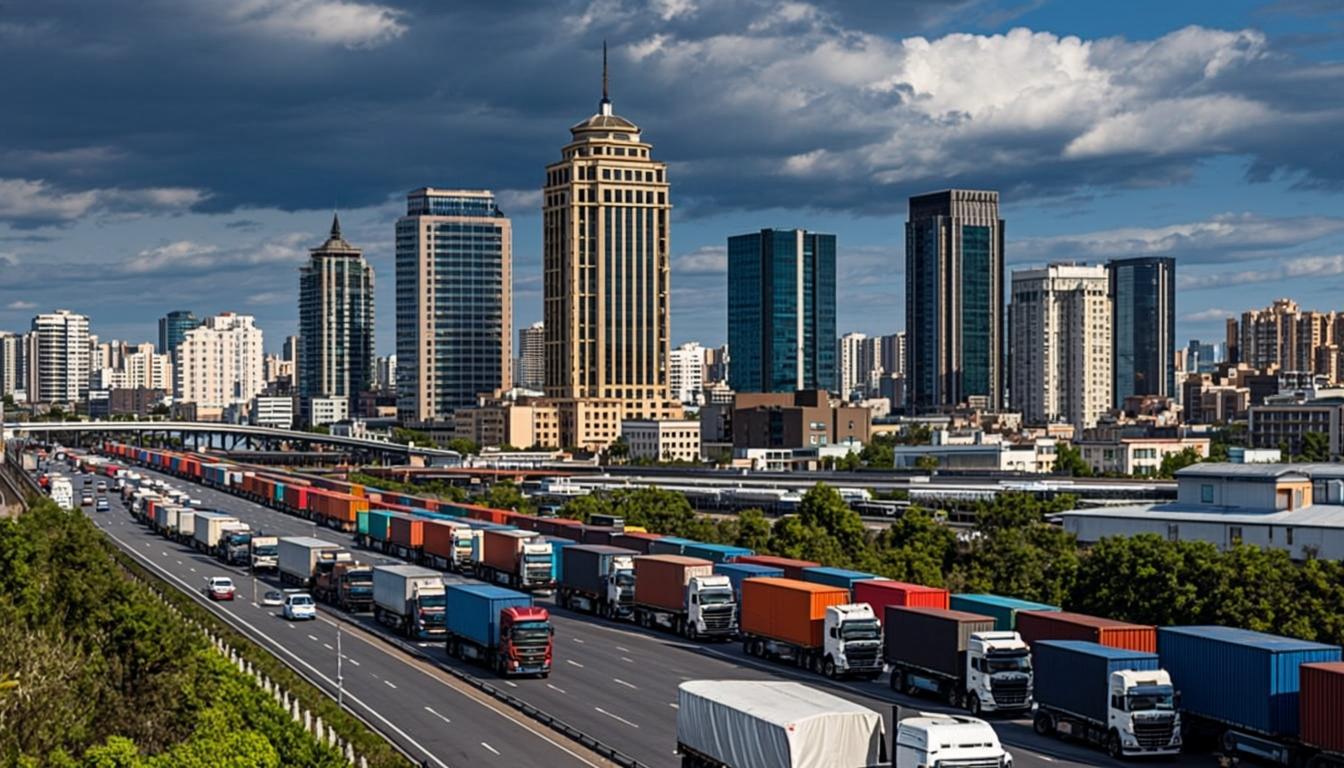
Recognizing that efficient trade facilitation is essential for both import competitiveness and export growth, Kazakhstan has invested heavily in customs modernization and digital trade infrastructure. The introduction of an electronic customs clearance system, integrated with the Eurasian Economic Union's common customs framework, has reduced average clearance times from 72 hours to under 8 hours for standard shipments. The implementation of a risk-based inspection system, authorized economic operator (AEO) programs, and single-window customs processing has positioned Kazakhstan among the top reformers in global trade facilitation rankings. The World Bank's Logistics Performance Index shows Kazakhstan improving its score by 15% over the past five years, reflecting tangible progress in border management, infrastructure quality, and supply chain reliability.
The Belt and Road Initiative: Kazakhstan's Gateway Position
Kazakhstan's strategic participation in China's Belt and Road Initiative (BRI) has catalyzed transformative investments in trade infrastructure, including the Trans-Caspian International Transport Route, the Kazakhstan-China natural gas pipeline, and the Khorgos-Eastern Gate dry port, which handles over 200,000 TEU annually. The BRI framework has also stimulated industrial cooperation agreements between Kazakh and Chinese enterprises, resulting in the establishment of joint venture manufacturing facilities producing construction materials, agricultural equipment, and consumer electronics. These cooperative ventures are designed to both substitute imports and develop export-oriented production capacity, contributing to Kazakhstan's broader economic diversification objectives.
Digital Trade and E-Commerce Development
Kazakhstan's digital trade infrastructure has expanded rapidly, supported by the Digital Kazakhstan state program launched in 2017. The development of e-commerce platforms, digital payment systems, and cross-border e-trade facilitation mechanisms has created new channels for both import procurement and export market access. The government's ambitious targets include achieving $3 billion in e-commerce turnover by 2025, with cross-border transactions representing a growing share of total digital commerce. Regulatory frameworks for digital trade, including electronic signatures, online dispute resolution, and consumer protection, have been modernized to align with international best practices and facilitate seamless cross-border digital transactions.
Pillar Three: Export Diversification and Value Addition
Complementing import substitution efforts, Kazakhstan's trade policy emphasizes export diversification through value addition to traditional resource exports and development of non-resource export sectors. The government's State Program for Agro-Industrial Development targets $12 billion in agricultural exports by 2027, focusing on processed food products, organic produce, and halal-certified goods for Muslim-majority markets. The Kazakhstan Export and Investment Agency (Kazakh Invest) actively promotes investment in export-oriented manufacturing, particularly in sectors where Kazakhstan has comparative advantages including agricultural processing, metallurgy, chemical production, and tourism services. The country's burgeoning IT services sector, valued at approximately $2 billion annually, represents a growing export category with significant expansion potential.
Challenges and Outlook for Trade Policy Implementation
Despite substantial progress, Kazakhstan's trade diversification faces persistent challenges including limited domestic market size, skills gaps in advanced manufacturing, competition from established manufacturing hubs, and the ongoing geopolitical uncertainties affecting regional trade flows. The World Bank's 2025 country assessment notes that while structural reforms have created a more favorable business environment, further improvements in regulatory transparency, intellectual property protection, and access to finance are needed to sustain diversification momentum. Looking ahead, Kazakhstan's trade policy is expected to focus increasingly on green trade transitions, including renewable energy technology imports, carbon-neutral manufacturing standards, and sustainable supply chain development, positioning the country as a responsible participant in the evolving global trade architecture.
Conclusion: A Strategic Crossroads for Central Asian Trade
Kazakhstan's trade policy and economic diversification strategy represent a comprehensive, multi-decade program of structural transformation that is reshaping the country's role in the global economy. By balancing import substitution with export development, investing in trade facilitation infrastructure, and leveraging its strategic geographic position, Kazakhstan is building a more resilient, diversified economic foundation. The data from World Bank WITS, ITC TradeMap, and OEC confirms that these efforts are yielding measurable results, with the country's import and export profiles becoming increasingly diversified and sophisticated. For international trade professionals, investors, and policymakers, Kazakhstan represents one of the most dynamic and opportunity-rich trade environments in the Central Asian region.