


Israel Olive Oil Importers - HS 150990 - January 2023
HS 150990 — Olive Oil and Fractions — Importing Firms — Israel (January 2023)
HS Code: 150990 — Olive Oil and Fractions Thereof (not chemically modified)
Period: 1 January – 31 January 2023
Importer Country: Israel
Data Update Date: 26 March 2023
Transaction Count: 1 consignment — 24,000 kg naturel sizma olive oil from Turkey
Table of Contents
1. Consignment Data (January 2023)
The following consignment record represents the sole olive oil import transaction recorded under HS code 150930000014 (a sub-category of HS 150990) entering Israel from Turkey during January 2023. This shipment involved a significant volume of naturel sizma (extra virgin) olive oil transported via flexitank, a specialized bulk liquid container widely used for cost-efficient olive oil logistics.
Key Metrics: Unit price = USD 111,290.27 / 24,000 kg = USD 4.64/kg — consistent with January 2023 market prices for Turkish extra virgin olive oil in bulk flexitank shipments. The 24-tonne shipment represents a standard flexitank capacity (typically 20-24 tonnes per 20-foot container).
2. HS Code Classification & Product Analysis
The shipment was recorded under HS code 150930000014, which falls within the broader HS 1509 family covering olive oil and its fractions. Understanding this classification is essential for trade analysis, customs compliance, and duty rate determination. The hierarchical structure of the HS code reveals the specific product category and processing level of the olive oil in question.
The product description specifies “naturel sizma” olive oil, which is the Turkish designation for extra virgin olive oil (EVOO). This is the highest quality category of olive oil, obtained solely by mechanical pressing or centrifugation of olives without any chemical treatment. The acidity level of naturel sizma olive oil must not exceed 0.8% (expressed as free oleic acid), and it must exhibit superior sensory characteristics—fruitiness with no defects. The term “sizma” literally means “flowing” in Turkish, referring to the natural extraction method where oil flows freely from the press without heating or chemical solvents.
The product’s origin is explicitly stated as “Product of Turkey,” confirming that the olives were grown, harvested, and pressed in Turkey. Turkey is the world’s fifth-largest olive oil producer and a significant exporter, particularly to markets in the Middle East, North Africa, and increasingly to Israel. Turkish EVOO is valued for its competitive pricing relative to European Mediterranean oils, while maintaining quality standards compliant with International Olive Council (IOC) specifications.
3. Turkey — Israel Olive Oil Trade Context

The Turkey-Israel bilateral trade relationship in olive oil has been a consistent feature of Mediterranean commerce for decades, driven by geographic proximity, complementary market needs, and established logistics networks. The distance between Turkey’s major olive oil production regions (Aegean coast: Ayvalik, Edremit, Milas; Mediterranean: Mersin, Antalya) and Israeli ports (Haifa, Ashdod) is relatively short—approximately 400-600 nautical miles—enabling sea freight transit times of just 2-4 days.
In the period preceding 2023, Turkey-Israel olive oil trade had been affected by diplomatic tensions that led to periodic trade restrictions. However, the normalization of diplomatic relations in 2022-2023 has reinvigorated bilateral trade flows. The January 2023 consignment documented here is one of the early indicators of renewed olive oil trade activity. Israeli importers have historically valued Turkish olive oil for its price competitiveness—typically 15-25% below comparable European EVOO—and for the availability of bulk shipment formats like flexitanks, which dramatically reduce per-kilogram logistics costs compared to bottled shipments.
The 24-tonne flexitank shipment documented here represents a typical mid-scale commercial transaction. Such volumes are consistent with medium-sized Israeli importers who distribute bulk olive oil to local bottling facilities, food manufacturers (hummus, falafel, salad dressing producers), and institutional buyers (hotels, restaurants, catering companies). The Israeli food industry is a major consumer of olive oil, with per capita consumption estimated at 3-4 kg annually—among the highest in the world outside the EU—creating steady import demand that Turkey is well-positioned to serve.
4. Israel’s Olive Oil Market & Import Dependency
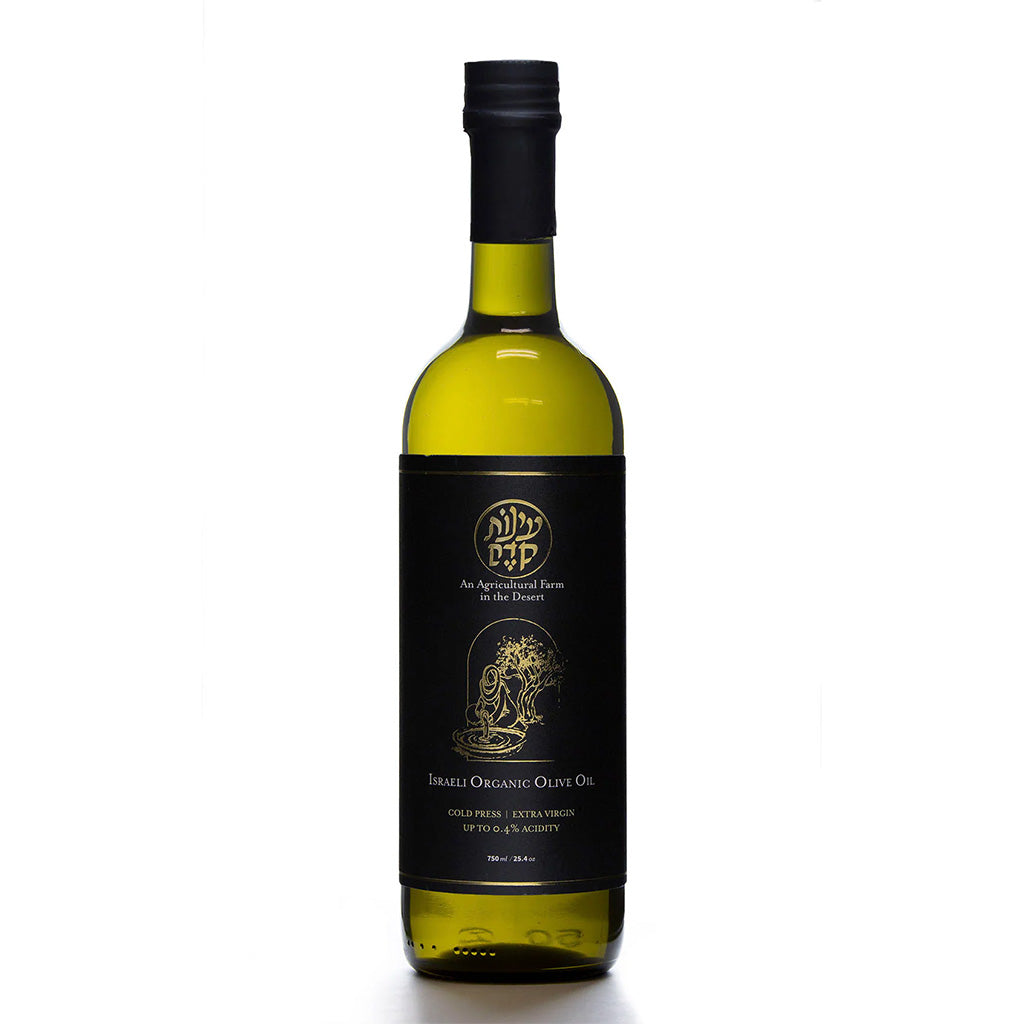
Israel presents a unique olive oil market profile. Despite having a domestic olive oil production sector—concentrated in the Galilee and Judean Hill regions with estimated annual production of 15,000-20,000 tonnes—domestic output covers only about 30-40% of total consumption. The remaining 60-70% must be imported, creating a substantial and ongoing import demand. In 2022, Israel imported approximately 30,000-35,000 tonnes of olive oil, with major source countries including Spain, Greece, Italy, Turkey, and increasingly Tunisia and Jordan.
The Israeli olive oil market is characterized by a clear segmentation: the premium segment favors locally produced cold-pressed EVOO from boutique Galilee producers (selling at USD 15-25/liter retail), the mid-range segment is served by imported European EVOO in branded bottles (USD 8-15/liter), and the bulk/commercial segment—where Turkish imports primarily compete—supplies food manufacturers and institutional buyers at USD 4-7/kg in bulk. This three-tier structure means that Turkish bulk EVOO, as exemplified by the January 2023 shipment, primarily serves the commercial and food-service segments rather than direct retail.
Israeli consumer preferences are shifting toward higher-quality olive oil, driven by health awareness campaigns, Mediterranean diet adoption, and growing culinary sophistication. The Israeli Standards Institution (SII) has progressively tightened olive oil labeling and quality requirements, aligning with IOC standards. This trend creates opportunities for quality-focused Turkish exporters who can provide well-documented EVOO with laboratory certificates confirming acidity, peroxide values, and sensory panel results. The January 2023 shipment’s naturel sizma classification positions it at the premium end of the bulk market, suitable for repackaging into retail bottles bearing extra virgin labeling.
5. Flexitank Logistics & Bulk Transport
The product description explicitly notes “1 Flexitank” as the transport format for this 24,000 kg shipment. Flexitanks have revolutionized bulk liquid cargo transport over the past two decades and have become the preferred method for olive oil shipments exceeding 10 tonnes. Understanding flexitank logistics is essential for any exporter considering the Turkey-Israel olive oil trade corridor.
A flexitank is a single-use, collapsible liquid container made of multi-layer food-grade polyethylene and polypropylene, installed inside a standard 20-foot shipping container. Typical capacity ranges from 16,000 to 24,000 liters (corresponding to approximately 14,700-24,000 kg of olive oil, depending on density). Key advantages over alternative bulk transport methods include: vs. drums — 30% lower per-kg transport cost, no drum cleaning/return logistics; vs. IBC totes — higher payload per container (24t vs 16t), lower unit cost; vs. ISO tanks — no return freight for empty tanks, no cleaning costs, lower total logistics cost for one-way shipments.
For the Turkey-Israel corridor specifically, a typical flexitank shipment flows as follows: olive oil is produced and stored at the Turkish exporter’s facility → loaded into a flexitank inside a 20′ container at the port of Mersin or Izmir → sea freight to Haifa or Ashdod (2-4 days transit) → container received at Israeli importer’s facility → oil pumped out for bottling or food manufacturing use. Total door-to-door logistics cost for a 24-tonne flexitank on this corridor is approximately USD 2,500-4,000, representing USD 0.10-0.17/kg—a fraction of the product value of USD 4.64/kg. This cost efficiency makes flexitank the optimal choice for bulk olive oil trade between Turkey and Israel.
6. Israeli Import Regulations & Standards
Importing olive oil into Israel requires compliance with several regulatory frameworks administered by different government agencies. Turkish exporters must understand and satisfy these requirements to successfully access the Israeli market. Non-compliance can result in shipment rejection at customs, financial losses, and damage to commercial relationships.
The kosher certification requirement deserves special attention. While olive oil is inherently kosher (produced from olives without animal-derived additives), commercial sale in Israel requires formal kosher supervision from a recognized rabbinical authority such as the Chief Rabbinate of Israel, OU (Orthodox Union), or Badatz. For bulk shipments intended for industrial use (as in this January 2023 consignment), kosher certification may be less strictly enforced, but for any oil that will be repackaged for retail sale, kosher certification is commercially essential. Turkish exporters should arrange kosher supervision at the pressing facility—many Turkish olive oil mills already hold kosher certifications for their export production lines.
7. Opportunities for Turkish Exporters

The January 2023 consignment data reveals a live, functioning trade channel between Turkey and Israel for bulk extra virgin olive oil. This represents significant opportunities for Turkish olive oil exporters, particularly in the context of the post-normalization trade environment and rising global olive oil prices. Several factors make the Israel market especially attractive for Turkish suppliers at this juncture.
Turkish EVOO typically trades at USD 4-6/kg in bulk, 15-25% below European equivalents. The USD 4.64/kg in this shipment confirms competitive positioning in the Israeli commercial segment.
2-4 day sea transit from Mersin/Izmir to Haifa/Ashdod. Flexitank logistics cost under USD 0.17/kg. No other major EVOO source can match this combination of proximity and cost efficiency for Israel.
Israeli olive oil consumption rising 3-5% annually, driven by health trends and Mediterranean diet adoption. Food industry demand for bulk EVOO (hummus, salads) provides stable off-take volumes.
Turkey-Israel Free Trade Agreement provides preferential tariff rates on olive oil imports, reducing the landed cost advantage further compared to non-FTA competitors.
For Turkish exporters seeking to enter or expand in the Israeli market, the recommended approach is to start with bulk flexitank shipments to established Israeli importers (as exemplified by this January 2023 transaction), build quality credentials through consistent product specifications and laboratory certifications, and then explore value-added opportunities such as private-label bottling for Israeli retail brands or direct retail distribution with kosher-certified branded products. The Israeli market rewards long-term relationship building and reliability—consistent quality, on-time delivery, and transparent documentation are more valued than aggressive price discounting.
8. Frequently Asked Questions
Yorumlar - Yorum Yaz