


DOKUMA MAKİNELERİ | İTHALATÇILAR | TÜRKİYE
Weaving Machine Importers in Turkey: A Complete Industry Guide
Comprehensive data on Turkish companies importing weaving machines, compiled from official customs and shipping records (2020)
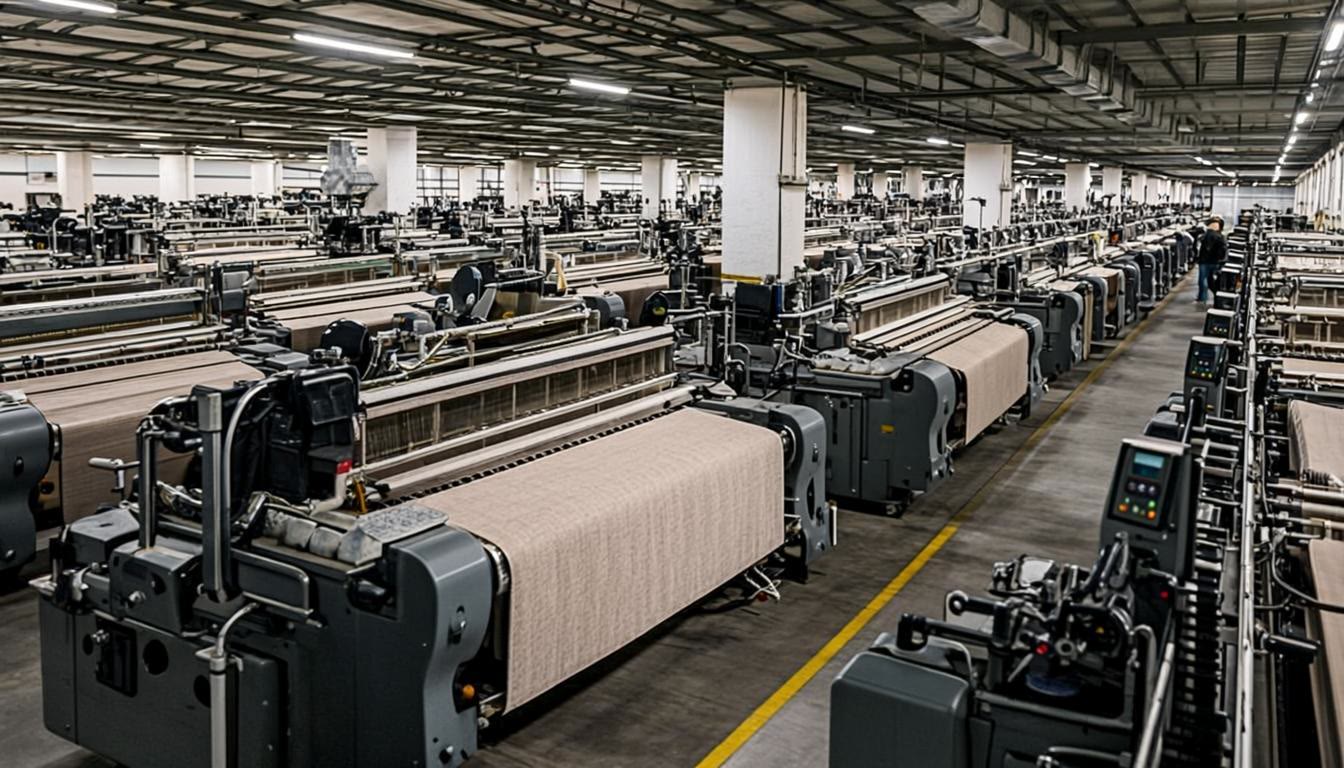
Turkey stands as one of the world's leading textile manufacturing hubs, with a deeply rooted history in fabric production that stretches back centuries. As the Turkish textile industry has modernized and expanded its global reach, the demand for advanced weaving machinery has surged dramatically. Weaving machine importers in Turkey play a pivotal role in this supply chain, sourcing cutting-edge looms and related equipment from leading international manufacturers. These imports range from air jet and rapier weaving machines to specialized jacquard carpet weaving systems and wide-width armored looms capable of producing industrial-grade fabrics at scale. The data presented in this guide is derived from official customs declarations and bill of lading records from 2020, offering a transparent view into the companies driving Turkey's weaving machine imports and the specific equipment they acquire.
Table of Contents
Key Weaving Machine Importers in Turkey
The following companies have been identified as significant importers of weaving machines into Turkey based on 2020 customs and shipping documentation. Each entry includes the company name and the specific type of weaving equipment imported, providing valuable intelligence for suppliers, analysts, and industry stakeholders seeking to understand the Turkish market for textile machinery.
Yunsa Yunlu San Ve Tic. A.S.
Product Imported: Weaving Machine (AWS 6 / SG 16 220) (With 1 Set of Details)
Yunsa Yunlu Sanayi ve Ticaret A.S. is a well-established Turkish textile enterprise specializing in woolen and worsted yarn production. The company imported an AWS 6 / SG 16 220 weaving machine along with a complete set of accessory details, reflecting its commitment to maintaining a modern and efficient production line. This type of weaving machine is particularly suited for medium-width fabric production and is widely used in mills producing apparel fabrics, upholstery textiles, and technical textiles.
Garanti Finansal Kiralama A.S.
Product Imported: Jacquard Carpet Weaving Machine with Necessary Equipment and Accessories (GL.SR.No:1)
Garanti Finansal Kiralama, the financial leasing arm of Garanti BBVA, facilitated the import of a jacquard carpet weaving machine equipped with all necessary accessories. Financial leasing companies like Garanti play a critical intermediary role in Turkey's textile machinery market, enabling manufacturers to acquire high-cost equipment through lease financing arrangements. Jacquard weaving machines are essential for producing patterned carpets and rugs with intricate designs, a segment where Turkey has a strong competitive advantage in global markets.
Jnr Mensucat Tekstil Sanayi Ve Ticaret Anonim Sirketi
Product Imported: Weaving Machine (220 cm) (Complete with Parts and Accessories)
Jnr Mensucat is an active textile manufacturing company that imported a complete 220 cm weaving machine system including all parts and accessories. The 220 cm width is a standard reed space dimension widely used in the production of apparel fabrics, home textiles, and decorative fabrics. By importing a fully equipped system, the company ensured it had everything needed for immediate integration into its existing production workflow, minimizing downtime and setup costs associated with new machinery installation.
Bnp Paribas Finansal Kiralama Anonim Sirketi
Product Imported: Weaving Machine (220 cm) with All the Necessary Equipment (GL SR No.1)
BNP Paribas Finansal Kiralama A.S. is another major financial leasing institution operating in Turkey that facilitated the import of a 220 cm weaving machine with all required equipment. The presence of international financial institutions like BNP Paribas in Turkey's textile machinery import chain underscores the scale of investment flowing into the sector and the confidence that global financial players have in the long-term viability of Turkish textile manufacturing.
Kuveyt Turk Katilim Bankasi Anonim Sirketi
Product Imported: Armored Weaving Machine (360 cm) with Axle
Kuveyt Turk Katilim Bankasi, a prominent participation bank in Turkey, facilitated the import of a wide-width 360 cm armored weaving machine complete with axle assembly. The 360 cm width classifies this as an industrial-scale loom suitable for producing wide fabrics used in applications such as home textiles, technical textiles, and industrial fabrics. Armored weaving machines are designed for high-speed, high-durability operation, making them ideal for continuous production environments where reliability and output consistency are paramount.
Bnp Paribas Finansal Kiralama Anonim Sirketi (Second Entry)
Product Imported: Weaving Machine with All Necessary Equipment (GLB Row No: 1)
BNP Paribas Finansal Kiralama appears a second time in the customs records, indicating the import of an additional weaving machine unit with all necessary equipment. This repeat import activity highlights the active role that financial leasing companies play in scaling Turkey's textile manufacturing capacity, enabling multiple textile producers to access modern machinery without the burden of large upfront capital expenditures.
Anilsan Havlu Sanayi Ve Ticaret Anonim Sirketi
Product Imported: Picanol Armored Weaving Machine (Width 360 cm)
Anilsan Havlu, a Turkish company specializing in towel manufacturing, imported a Picanol-branded armored weaving machine with a 360 cm working width. Picanol is one of the world's most respected weaving machine manufacturers, known for producing high-performance air jet and rapier looms.
Sanko Tekstil Isletmeleri
Product Imported: The Weaving Machine Is Complete, New with Its Necessary Equipments
Sanko Tekstil Isletmeleri, part of the expansive Sanko Group (one of Turkey's largest conglomerates), imported a brand-new complete weaving machine system with all necessary equipment. Sanko is a major player in the Turkish textile industry with vast manufacturing operations spanning yarn production, weaving, dyeing, and finishing. Their investment in new weaving machinery reflects the continued expansion and modernization of Turkey's large-scale textile manufacturers, who must maintain state-of-the-art equipment to compete in international markets.
The Turkish Weaving Machine Market: Trends, Technology, and Strategic Insights
Introduction to Turkey's Textile Machinery Landscape
Turkey's textile industry represents one of the most dynamic and historically significant manufacturing sectors in the country, contributing billions of dollars annually to the national economy and employing hundreds of thousands of workers across the value chain. At the heart of this vast industry lies the weaving sector, which transforms yarn into finished fabrics through the interlocking of warp and weft threads on sophisticated mechanical looms. The weaving machine import market in Turkey is therefore a critical indicator of the sector's health, technological sophistication, and future growth trajectory. Understanding who imports weaving machines, what types of equipment they acquire, and how these imports align with broader industry trends provides invaluable insights for equipment manufacturers, trade analysts, financial institutions, and textile companies themselves.
The customs and shipping data from 2020 reveals a fascinating picture of Turkey's weaving machine import landscape. The companies identified in this dataset range from direct textile manufacturers to financial leasing institutions, reflecting the diverse financing mechanisms through which Turkish companies acquire capital equipment. Major European and Asian weaving machine manufacturers, including Picanol, Itema, Dornier, Tsudakoma, and Toyota, supply the majority of advanced weaving equipment to Turkish buyers. These machines vary widely in technology, width, speed, and application specificity, from narrow-width rapier looms for fashion fabrics to ultra-wide air jet machines for technical and home textiles.
The Role of Financial Leasing in Textile Machinery Imports
One of the most striking features of the 2020 import data is the prominent role played by financial leasing companies. Institutions such as Garanti Finansal Kiralama, BNP Paribas Finansal Kiralama, and Kuveyt Turk Katilim Bankasi appear as direct importers of weaving machines, which they then lease to end-user textile manufacturers. This financing model is enormously important in Turkey's textile sector because it allows manufacturers to spread the cost of expensive machinery over several years while preserving working capital for raw materials, labor, and operational expenses. Weaving machines, particularly advanced models with jacquard capabilities or wide-width configurations, can cost anywhere from tens of thousands to hundreds of thousands of dollars per unit. Without leasing arrangements, many small and medium-sized textile producers would simply be unable to afford the equipment upgrades necessary to remain competitive.
The participation of both conventional banks (like Garanti and BNP Paribas) and participation banks (like Kuveyt Turk) in textile machinery leasing demonstrates the breadth of financial infrastructure supporting Turkey's textile sector. This diversity of financing options ensures that textile companies of all sizes and financial profiles can access the machinery they need to modernize their operations. It also means that the weaving machine import market is partially insulated from the direct financial cycles of individual textile companies, as leasing companies bear some of the credit risk and can redistribute assets across multiple lessees over the equipment's useful life.
Technology Trends in Turkey's Weaving Machine Imports
The variety of weaving machine types imported into Turkey in 2020 reveals several important technology trends shaping the industry. The presence of jacquard carpet weaving machines, for instance, reflects Turkey's dominant position in the global carpet and rug market. Turkish carpet manufacturers are continually investing in advanced jacquard looms that can produce increasingly complex patterns with higher speeds and greater design flexibility. These machines often incorporate electronic jacquard heads with thousands of hooks, enabling the creation of intricate designs that were previously only possible with hand-knotted techniques.
The import of armored weaving machines with 360 cm working widths signals a significant investment in high-capacity, industrial-scale production. Wide-width looms are essential for producing home textiles such as bed linens, tablecloths, curtains, and towels at the maximum possible efficiency. By producing wider fabrics, manufacturers can reduce the number of selvage edges (which represent wasted material) and increase their effective yield per square meter of fabric produced. The Picanol armored loom imported by Anilsan Havlu, for example, is specifically designed for the demanding environment of towel manufacturing, where high humidity, fiber dust, and continuous operation place exceptional demands on machine reliability and maintenance requirements.
Air jet weaving machines, such as the AWS 6 / SG 16 220 model imported by Yunsa, represent the mainstream technology for medium-speed, high-efficiency fabric production. These machines use compressed air to insert the weft yarn across the warp, achieving speeds that can exceed 1,500 picks per minute on modern models. The versatility of air jet looms makes them suitable for a wide range of fabric types, from lightweight shirting materials to heavier upholstery and curtain fabrics. Their relatively lower energy consumption compared to older shuttle looms also aligns with the textile industry's growing focus on sustainability and operational efficiency.
Key Turkish Textile Hubs and Their Machinery Needs
Turkey's weaving machine import demand is driven by several major textile production clusters distributed across the country. Istanbul and its surrounding industrial zones remain the largest concentration of textile activity, housing numerous weaving mills that produce fabrics for the local garment industry as well as for export. The Gaziantep region is another critical hub, particularly for carpet weaving and home textile production, which explains the demand for jacquard and wide-width looms. Denizli is famous for its towel production, while Bursa and Kayseri are major centers for cotton and blended fabric weaving.
Each of these regional hubs has distinct machinery requirements based on the types of products they specialize in. Carpet-producing regions need high-density jacquard machines with electronic lifting mechanisms, while towel-producing areas require wide-width looms with pile insertion capabilities. Apparel fabric producers, concentrated mainly in Istanbul and the Marmara region, tend to favor versatile air jet and rapier machines that can handle frequent style
changes and smaller batch sizes. Understanding these regional specializations is essential for weaving machine manufacturers and exporters seeking to target the Turkish market effectively.The Supply Chain: From Import to Production
The process of importing weaving machines into Turkey involves a complex supply chain that begins with the manufacturer (typically located in Europe, Japan, China, or Korea) and ends with installation and commissioning at the buyer's factory. After a weaving machine is ordered, it typically requires several months of lead time for manufacturing, testing, and shipping. Upon arrival at a Turkish port, the equipment must clear customs, which involves the payment of import duties, VAT, and various other fees. The customs records captured in this dataset originate from this stage of the supply chain, when the importer formally declares the imported equipment to Turkish customs authorities.
Once cleared, the weaving machine is transported to the buyer's facility, where it undergoes installation by the manufacturer's technical service team or by specialized local technicians. The installation and commissioning process can take anywhere from a few days to several weeks, depending on the complexity of the machine and the extent of any required factory modifications (such as compressed air systems for air jet looms or electrical infrastructure upgrades). After commissioning, the machine enters a break-in period during which operators are trained and production parameters are optimized for the specific fabrics to be manufactured.
Related Industry Resources
For professionals and researchers seeking additional data on Turkey's textile machinery import landscape, several related resources are available on the ithalatihracat.biz platform. The Textile Spinning Machine Importers in Turkey page provides complementary data on companies importing spinning equipment, which represents the upstream process feeding into weaving operations. The Knitting Machine Needle Import Data page offers insights into the knitting sector, another major segment of Turkey's textile machinery market. Additionally, the Industrial Sewing Machine Import Analysis provides a comprehensive view of post-weaving processing equipment imports. For broader textile industry context, the Turkish Textile Manufacturers directory and the Turkey Carpet Exporters page are excellent reference sources. Information on textile carding machine companies and sewing machine needle companies further complements the overall picture of Turkey's textile machinery ecosystem.
Outlook for Turkey's Weaving Machine Import Market
Looking ahead, Turkey's weaving machine import market is expected to remain robust, driven by several macro-level trends. The country's strategic geographic position between Europe and Asia makes it an ideal production base for both Western and Eastern markets. Ongoing trade agreements and preferential trade arrangements with the European Union provide additional impetus for Turkish textile manufacturers to invest in capacity expansion and technology upgrades. The global shift toward sustainable and ethically produced textiles is also creating new demand for advanced weaving machines that can produce fabrics with minimal waste, lower energy consumption, and reduced environmental impact.
Furthermore, the increasing adoption of Industry 4.0 technologies in the textile sector, including IoT-enabled looms, automated quality inspection systems, and data-driven production optimization, is expected to drive a new wave of machinery replacement and upgrade cycles across Turkey. Turkish textile companies that fail to keep pace with these technological advances risk losing market share to competitors in countries like Vietnam, Bangladesh, and India, who are also investing heavily in modern weaving technology. For weaving machine manufacturers and exporters, Turkey therefore represents not only a large and established market but also one that is continually evolving in terms of its technology requirements and sophistication expectations.
Frequently Asked Questions
What types of weaving machines are most commonly imported into Turkey?
Turkey imports a wide variety of weaving machines including air jet looms, rapier looms, projectile looms, and jacquard weaving machines. Air jet looms are the most popular due to their high speed and versatility, while jacquard machines are essential for the carpet and rug industry. Wide-width armored looms (340-360 cm) are commonly imported by home textile manufacturers producing towels, bed linens, and curtains. The specific type of machine imported depends on the end-use application, fabric width requirements, and the production volume targets of the importing company.
Why do financial leasing companies import weaving machines in Turkey?
Financial leasing companies such as Garanti Finansal Kiralama and BNP Paribas Finansal Kiralama import weaving machines on behalf of textile manufacturers who prefer to lease rather than purchase equipment outright. Leasing allows manufacturers to acquire expensive machinery with lower upfront costs, spreading payments over the useful life of the equipment. This arrangement preserves working capital, provides tax advantages, and enables companies to regularly upgrade to newer technology as older machines are phased out. The leasing model is especially important for small and medium-sized enterprises in Turkey's textile sector.
What is the significance of the 360 cm width in armored weaving machines?
A 360 cm working width is considered wide-width in the weaving industry and is particularly important for home textile production. Wider looms allow manufacturers to produce broader fabrics in a single pass, which reduces material waste from selvage edges, increases production efficiency, and lowers per-unit manufacturing costs. Wide-width looms are essential for producing items like bed sheets, tablecloths, curtains, and industrial fabrics where maximum width is required. The 360 cm width is also advantageous for towel manufacturers who need to weave pile fabrics efficiently at industrial scales.
Which countries are the main suppliers of weaving machines to Turkey?
Turkey sources weaving machines from several leading manufacturing countries. Belgium (home to Picanol) is a major supplier of air jet and rapier looms. Italy (Itema), Germany (Dornier), and Switzerland (Staubli for jacquard heads) are key European suppliers. Japan (Tsudakoma, Toyota) supplies high-end air jet and water jet looms. China has also become an increasingly important source of more affordable weaving machines, particularly for the mid-range market segment. The choice of supplier typically depends on the specific technology requirements, budget constraints, and after-sales service expectations of the Turkish buyer.
How does Turkey's customs data help identify weaving machine importers?
T
What is the role of the HS code 8446 in weaving machine imports?
HS Code 8446 covers weaving machines (looms) in the Harmonized Commodity Description and Coding System used by customs authorities worldwide. This code encompasses various sub-categories including narrow fabric looms, jacquard looms for carpets and similar fabrics, and other types of weaving machinery. When Turkish companies import weaving machines, the equipment is classified under this HS code (or its more specific sub-codes) in customs declarations. Accurate HS code classification is important because it determines the applicable import duty rate, whether any preferential tariff treatment applies, and whether specific import licensing requirements must be met.
What is the typical cost range for weaving machines imported by Turkish companies?
The cost of weaving machines imported into Turkey varies widely depending on the technology, width, brand, and configuration. Basic rapier or air jet looms for standard fabric production typically range from $30,000 to $80,000 per unit. Mid-range models with advanced electronics and wider working widths can cost $80,000 to $150,000. High-end jacquard weaving machines for carpet production with electronic lifting systems can exceed $200,000 to $500,000 per unit. These prices generally do not include installation, training, and spare parts packages, which can add 10-20% to the total cost of ownership. Financial leasing arrangements typically span 3 to 7 years depending on the machine type and the lessee's credit profile.
How does the Turkish weaving machine market compare to other textile-producing countries?
Turkey is one of the largest importers of textile machinery in the world, consistently ranking among the top 10 markets globally. Compared to countries like China, India, and Bangladesh, Turkey tends to import more advanced and higher-value weaving machines, reflecting its focus on producing higher-quality, value-added textiles for export to European markets. While China and India import larger volumes of basic weaving equipment to support their mass-production capabilities, Turkey's imports skew toward sophisticated, technology-intensive machines that enable the production of complex fabrics, technical textiles, and premium home textiles. This positioning makes Turkey an attractive market for premium weaving machine manufacturers.
What are the key challenges facing weaving machine importers in Turkey?
Weaving machine importers in Turkey face several challenges including currency volatility (as machinery is typically priced in EUR or USD), fluctuating import duty rates, and complex customs clearance procedures. The rapid pace of technological change means that imported equipment can become outdated relatively quickly, creating pressure to continually reinvest in newer models. Supply chain disruptions, whether from geopolitical tensions, pandemic-related shipping delays, or manufacturer capacity constraints, can also impact the timely delivery of ordered equipment. Additionally, the shortage of skilled technicians capable of maintaining and repairing advanced weaving machines remains an ongoing challenge for the Turkish textile industry.
Where can I find more data on Turkish textile machinery imports?
Comprehensive data on Turkish textile machinery imports is available through the ithalatihracat.biz platform, which maintains detailed records of importer companies, product descriptions, and trade data. Related pages include the Textile Spinning Machine Importers in Turkey for upstream equipment data, the Knitting Machine Needle Importers page, and the Industrial Sewing Machine Import Analysis for post-weaving machinery insights. The Turkish Statistical Institute (TurkStat) and the Turkish Exporters Assembly (TIM) also publish aggregate trade statistics that can supplement company-level data.
Yorumlar - Yorum Yaz