


Turkey's Shipbuilding Industry: A 2024 Report
Executive Summary
With a 600-year tradition, Turkey's shipbuilding industry has become a global powerhouse. Its strategic location and advanced shipyards drive significant economic growth, generating billions in revenue and employing tens of thousands. Turkish shipyards are world-renowned for producing a diverse range of high-quality vessels, from sophisticated chemical tankers to luxurious mega-yachts, all built to rigorous international standards.
1. Strategic Position & Market Drivers
Turkey's unique geography, surrounded by four seas and bridging Asia and Europe, provides a natural advantage for its maritime sector. The nation's shipbuilding industry is propelled by several key factors:
- Growth in global trade and demand for sea transport.
- The need for modern, eco-friendly fleet renewals.
- Turkey's reputation for quality and competitive pricing.
- Strong government support and strategic investments in shipyard infrastructure.
2. A 600-Year Maritime Legacy
Shipbuilding in Anatolia is a tradition stretching back over 600 years. The first shipyard was established in Gelibolu in 1390. By the 16th century, Ottoman shipyards were among the largest in the world. This deep-rooted heritage of craftsmanship, now combined with modern technology, forms the foundation of the industry's success.
3. Modern Capabilities & Global Rank
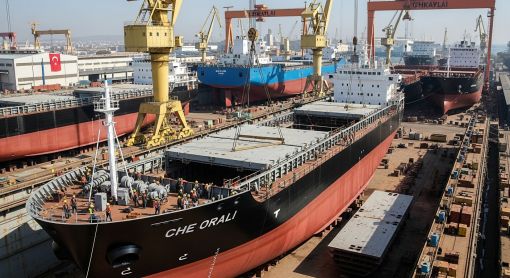
Today, Turkey is a leading force in the international maritime sector. The industry has blended traditional skills with advanced engineering to become an internationally recognized trademark. With over 80 active private shipyards, Turkey consistently ranks among the top shipbuilding nations globally.
These modern facilities are concentrated in key regions like Tuzla, Yalova, and the Aegean coast, offering comprehensive services from new builds to complex conversions and ship repair services.
4. Production Capacity & Economic Impact
The Turkish shipbuilding industry boasts impressive capacity and makes a substantial contribution to the national economy.
- New Shipbuilding Capacity: Approximately 4.7 million DWT annually.
- Repair & Maintenance Capacity: Over 20 million DWT annually.
- Steel Processing: Around 1 million tons per year.
- Economic Contribution: Over $2.5 billion from new builds and $1.5 billion from repairs.
- Employment: Provides direct jobs for over 40,000 people and supports 100,000 more in related industries.
5. Specialized Production & Quality
Turkish shipyards are known for their versatility and high-quality production, manufacturing vessels that meet strict international standards like ISO 9000. Key areas of specialization include:
- Low-tonnage chemical and oil tankers.
- Offshore support and special-purpose vessels.
- Advanced fishing and research vessels.
- Tugboats and military craft.
- Luxury yachts and the mega-yacht sector, where Turkey is a top-3 global leader.
In addition to new builds, Turkey is a major hub for ship repair, maintenance, and environmentally responsible ship recycling, with a capacity of over 1.5 million metric tons per year.
6. Export Markets & Performance
The industry is heavily export-oriented, with annual exports consistently exceeding $1.5 billion. Turkish-built vessels are in high demand across the globe.
The primary export categories include specialized cargo ships, ferries, tugboats, and luxury yachts. Key export markets for Turkish shipbuilding include Norway, the Netherlands, the United Kingdom, and other European maritime nations.
7. Future Outlook & Innovations
The future of Turkish shipbuilding is focused on innovation and sustainability. The industry is actively investing in:
- Green Technologies: Developing vessels powered by LNG, hydrogen, and hybrid systems to meet new environmental regulations.
- Digitalization: Implementing smart manufacturing (Industry 4.0) and autonomous systems to improve efficiency and safety.
- High-Value Niches: Expanding expertise in complex offshore wind farm vessels and passenger cruise ships.
8. Frequently Asked Questions
What is the current capacity of Turkey's shipbuilding industry?
As of 2024, Turkey's shipbuilding industry has an annual new shipbuilding capacity of approximately 4.7 million DWT and a ship repair and maintenance capacity exceeding 20 million DWT. The sector's steel processing capacity is around 1 million tons per year.
How does shipbuilding contribute to Turkey's economy?
The industry is a major economic driver, generating over $2.5 billion from new shipbuilding and $1.5 billion from repair services annually. It provides direct employment for over 40,000 people and supports an additional 100,000 jobs in related sectors.
What types of ships are primarily built in Turkey?
Turkish shipyards are renowned for their versatility, specializing in low-tonnage chemical and oil tankers, mega-yachts, offshore support vessels, tugboats, and advanced fishing vessels. They also produce container ships, bulk carriers, and specialized military craft, all adhering to international quality standards like ISO 9000.